Coriolis flow meters are increasingly popular in the food and beverage industry due to their high accuracy and ability to measure mass flow directly. Unlike traditional volumetric flow meters, Coriolis devices are not affected by changes in fluid density or viscosity, making them ideal for handling a wide range of liquids—from syrups and dairy products to beverages with suspended solids. Their reliability in measuring both flow rate and density simultaneously helps ensure consistent product quality and compliance with strict hygiene standards .
However, installing Coriolis flow meters in food and beverage processing lines comes with unique challenges. One major issue is ensuring proper orientation and support to avoid stress on the meter body, which can lead to measurement inaccuracies. These meters are sensitive to mechanical stress and vibration, especially in environments where pumps and mixers are constantly running. Mounting them in a way that minimizes pipe strain is crucial for long-term performance .
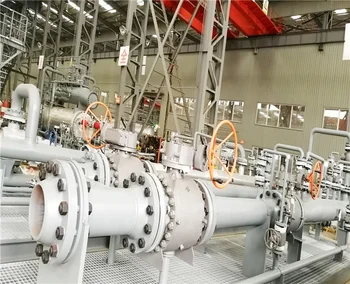
Another challenge is meeting sanitary requirements. In the food and beverage sector, clean-in-place (CIP) and sterilize-in-place (SIP) processes are standard. Coriolis meters must be installed in a way that allows complete drainage to prevent bacterial growth in stagnant zones. This often means installing the meter with a slight downward tilt or in a vertical position with upward flow, depending on the product being processed .
Space constraints also pose a problem. Many production facilities have limited room for additional instrumentation. Coriolis meters typically require straight pipe runs upstream and downstream to ensure stable flow profiles. When space is tight, engineers may need to use flow conditioners or consider compact designs that maintain accuracy without long inlet and outlet sections .
For applications where gas flow measurement is needed—such as monitoring nitrogen blanketing or CO₂ injection in beverage carbonation—alternative technologies like the insertion thermal mass flow meter can be a practical solution. These meters are easier to install in large ducts or pipes and offer cost-effective mass flow measurement for gases, complementing the role of Coriolis meters in liquid applications .
Precision gas control is also critical in certain food processing stages. For example, modifying the atmosphere in packaging to extend shelf life requires accurate gas blending. In such cases, a gas mass flow controller ensures that exact amounts of gases like nitrogen, oxygen, or carbon dioxide are delivered consistently, supporting both safety and product quality .
In conclusion, while Coriolis flow meters offer unmatched accuracy for liquid measurement in the food and beverage industry, their successful installation depends on careful planning. Addressing mechanical, hygienic, and spatial challenges ensures reliable operation. Pairing them with appropriate gas measurement tools expands process control capabilities across both liquid and gas phases .
Comments
Post a Comment